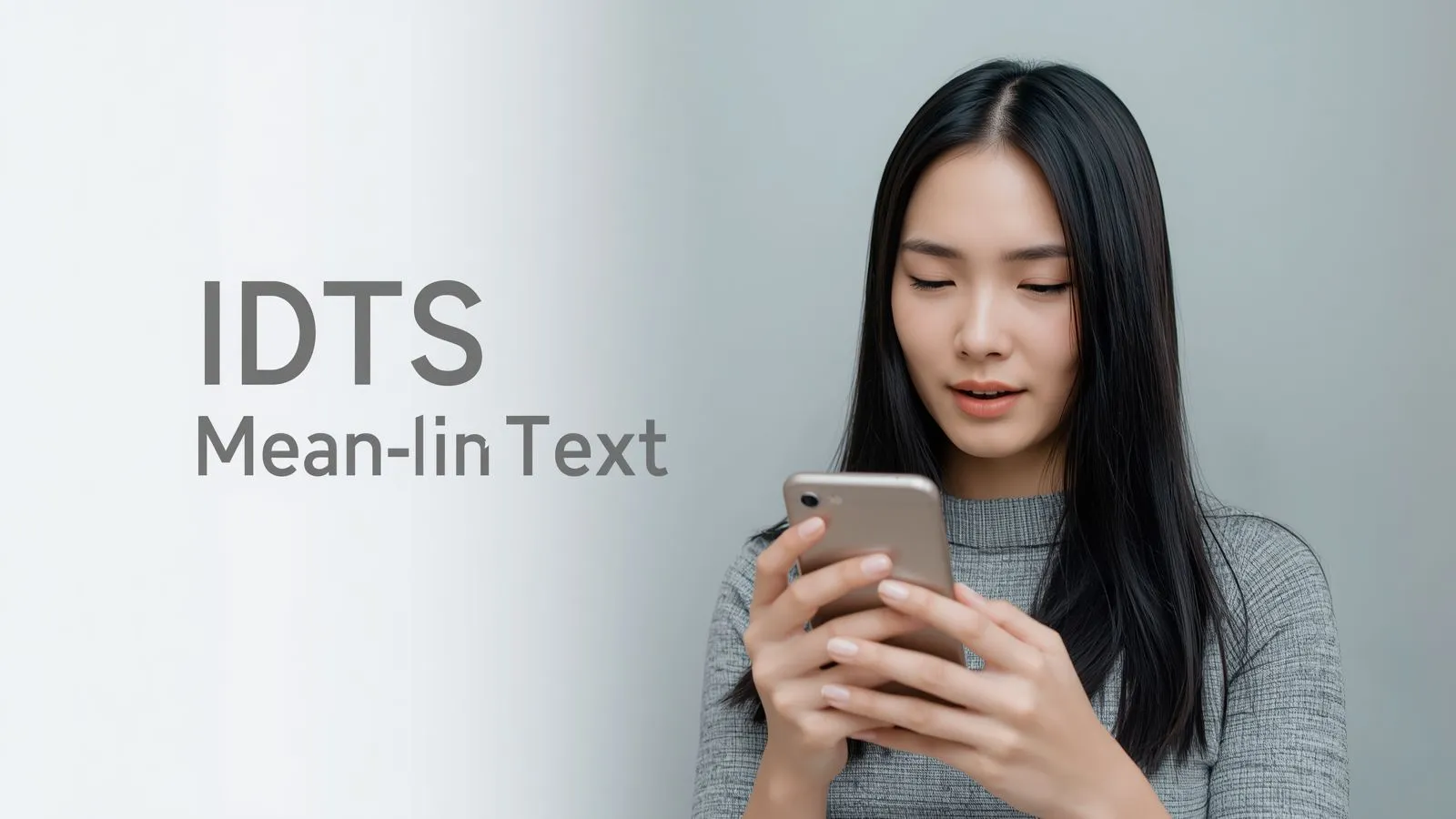
If someone sends you “IDTS” in a text message, they are usually expressing doubt or disagreement. IDTS means “I Don’t Think So.”
People use IDTS when they don’t agree with something, believe something is unlikely, or want to politely say “no.” It is a casual texting abbreviation commonly seen in messages, social media, and online chats.
For example:
“Do you think he’ll come tonight?”
“IDTS.”
This means:
“I don’t think so.”
Quick Answer: What Does IDTS Mean in Text?
IDTS means “I Don’t Think So” in text messages and online conversations. People use it when they disagree, doubt something, or believe something is probably not true.
For example:
A: “Do you think Sara is coming tonight?”
B: “IDTS.”
Here, IDTS means “I don’t think so,” suggesting that the person believes Sara probably isn’t coming.
It’s a casual abbreviation commonly used in texting, messaging apps, and social media.
What Does IDTS Stand For?
IDTS = I Don’t Think So
The phrase expresses uncertainty or disagreement without sounding as direct as simply saying “No.”
Depending on the conversation, IDTS can mean:
- “I don’t think that’s true.”
- “Probably not.”
- “I don’t believe so.”
- “I doubt it.”
The exact tone depends on the context.
How Is IDTS Used in Texting?
IDTS is mostly used in casual conversations. You might see it in text messages, group chats, comments, DMs, or conversations with friends.
1. When You Think Something Won’t Happen
A: “Are you going to the party tonight?”
B: “IDTS, I have too much homework.”
The person doesn’t expect to attend the party.
2. When You Doubt Something
A: “Do you think he’ll finish the project today?”
B: “IDTS.”
Here, IDTS shows doubt that he will finish the project.
3. When You Disagree Politely
A: “I think this is the best restaurant in town.”
B: “IDTS 😂 There are way better places.”
The abbreviation makes the disagreement feel casual rather than overly serious.
4. In Dating or Relationships
IDTS can also appear in casual dating conversations.
A: “Do you think he’s going to text you again?”
B: “IDTS.”
This means, “I don’t think so,” usually because the person doesn’t expect another message.
Is IDTS Rude?
Usually, no. IDTS is generally a casual and fairly soft way to disagree or express doubt.
However, the tone can change depending on the conversation.
For example:
“IDTS.”
A short reply like this might sound dismissive if the conversation is serious.
On the other hand:
“IDTS 😂”
may feel more playful and friendly.
If you’re talking to someone in a professional setting, it’s better to write “I don’t think so” rather than using IDTS.
IDTS vs. Similar Text Abbreviations
IDTS is sometimes confused with other common texting abbreviations.
| Abbreviation | Meaning | Typical Use |
| IDTS | I Don’t Think So | Doubt or disagreement |
| IDK | I Don’t Know | Uncertainty or lack of knowledge |
| IMO | In My Opinion | Giving an opinion |
| TBH | To Be Honest | Introducing an honest opinion |
| IDC | I Don’t Care | Showing indifference |
For example, IDK means you don’t know the answer, while IDTS means you have an opinion that something is probably not true or won’t happen.
“IDK if he’ll come.” = I don’t know whether he’ll come.
“IDTS.” = I don’t think he’ll come.
How to Respond to “IDTS”
Your response depends on what you want to say.
If you want to ask why:
“Why do you think that?”
If you disagree:
“Really? I think he will.”
If you agree:
“Yeah, same.”
If you want more information:
“What makes you think so?”
These responses keep the conversation natural instead of leaving the short abbreviation hanging.
Frequently Asked Questions
What does IDTS mean on Snapchat?
On Snapchat, IDTS usually means “I Don’t Think So.” It has the same meaning it does in ordinary texting and casual online conversations.
What does IDTS mean on Instagram?
On Instagram, IDTS generally means “I Don’t Think So.” You may see it in DMs, comments, or replies when someone disagrees or doubts something.
Is IDTS a slang word?
IDTS is a texting abbreviation rather than a traditional slang word. It’s formed from the first letters of “I Don’t Think So.”
Can I use IDTS in formal writing?
It’s best to avoid IDTS in formal emails, school assignments, business messages, and professional writing. Use the full phrase, “I don’t think so,” instead.
Conclusion
IDTS means “I Don’t Think So” and is commonly used to express doubt, disagreement, or a belief that something probably isn’t true. You’ll most often see it in texts, DMs, social media, and casual conversations.
Its tone is usually relaxed, but a very short “IDTS” can sometimes sound dismissive depending on the context.

Mia Parker is a professional writer and editor at Guestreachs.com, specializing in explaining the meanings behind words, phrases, slang, and expressions. She creates clear, easy-to-understand content that helps readers quickly find the meaning they’re looking for.